Life is filled with rituals—unnecessary but intentional activities we share with others. Over the past year, I have attended weddings and funerals, celebrated birthdays and anniversaries, commemorated Independence Day and Memorial Day, gathered with family for Thanksgiving Day and Christmas, and attended annual church services that didn’t take place on Sunday. Each of those activities included traditional and predictable elements. A bride walked down an aisle with her father and a family gathered in a cemetery. Songs were sung and stories were told. Bands paraded and flags were raised. Turkey was served and gifts were exchanged. The birth of Jesus was celebrated, and the death of Jesus was memorialized.
Life is filled with rituals. Some take place every year and others only take place during times of transition from one stage of life to another. Some are civic while others are familial or religious. Some involve a small group of people and others involve thousands. Some rituals are events unto themselves, like a baptism, and others are baked into events, like the seventh-inning stretch at a baseball game. Some are repeated throughout life, such as a birthday celebration, and some, like a graduation ceremony from a particular school, take place but once in life.
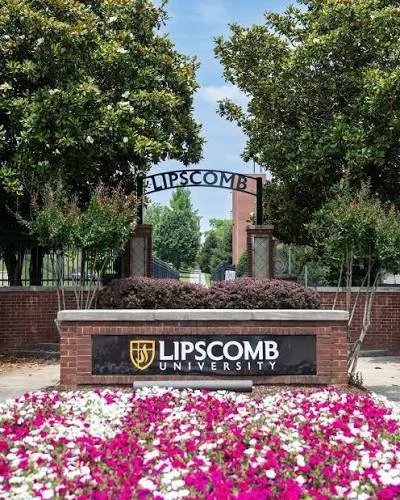
I am currently mystified by the ritual of class reunions. I plan to attend the reunion of the David Lipscomb College Class of 1976. I will spend two days traveling from Chicago to Nashville and back. I will spend two days reconnecting with people, most of whom I haven’t seen in fifty years and may never see again on this side of heaven. I will spend some money on “merch” and donate to my alma mater.
Why? Like all life’s rituals, the class reunion is an unnecessary but intentional action shared with others. The class reunion is unnecessary. My life will go on pretty much as it has been going whether or not I attend the reunion. The class reunion is also intentional; it requires decisive action. I will make reservations, travel to campus, participate in a handful of activities, and open my checkbook. I will spend time around tables enjoying food and fellowship with former classmates, many of whom I barely remember.
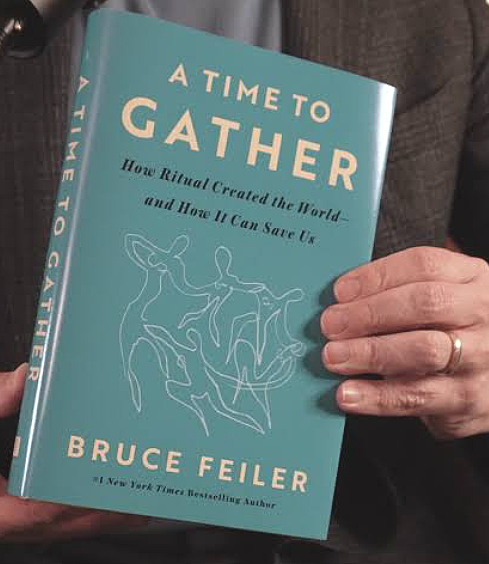
I’ve visited my alma mater many times since graduating in 1976. When I happened to be in Nashville, I would walk the campus of what is now Lipscomb University, take in a baseball game, reminisce, and then leave. Those visits differ from a class reunion, which is unnecessary yet somehow feels necessary. I didn’t understand why until I picked up Bruce Feiler’s A Time to Gather: How Ritual Created the World and How It Can Save Us (New York: Penguin Press, 2026).
Feiler went on a round-the-world ritual road trip, attending and participating in life rituals in sixteen countries on six continents. While he does not write about class reunions, his reflections helped me grasp their allure. Feiler made several observations that spoke slivers of truth into my life.
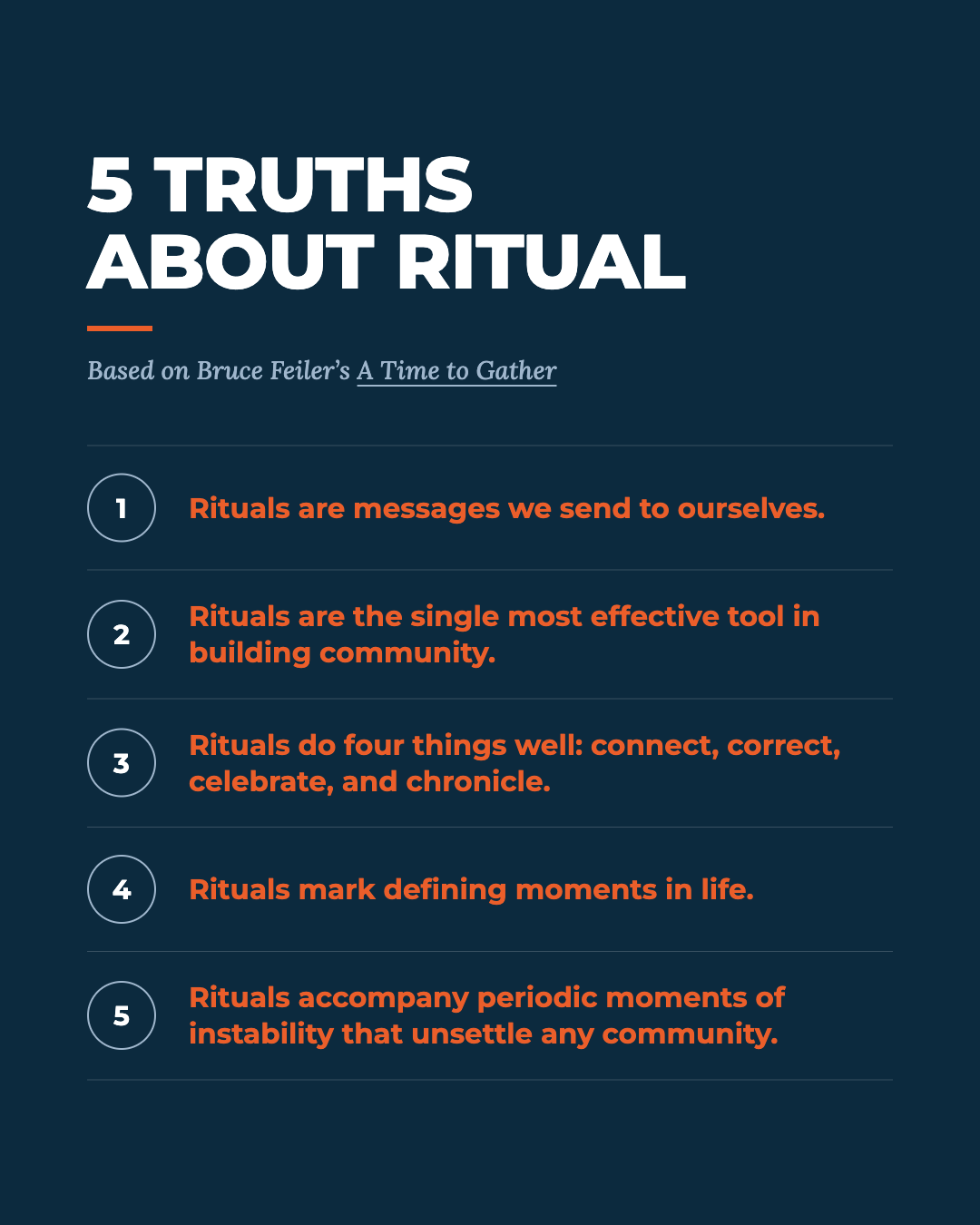
First, he observed that rituals are messages we send to ourselves. I would add that they are also messages we send to others, especially children. My grandparents went to church nearly every Sunday which they referred to as the “Sabbath Day.” Their weekly attendance, which often felt like legalism to us grandchildren, spoke volumes about the importance of that ritual.
Second, Feiler asserted that rituals are the single most effective tool in building community. I would add that they are just as effective at maintaining community. A wedding involving two families who, until then, barely knew one another builds community. The father of the bride toasts the groom’s family and welcomes the groom into his own. The father of the groom reciprocates. These two families are now bound together and will share many other rites of passage together. Eventually, there may come a time when they see one another only at weddings and funerals. But even then, they are family. As for class reunions, the DLC Class of 1976 came together on June 5, 1976, the day of our commencement. In the eyes of the Alumni Office, we are the Class of ’76. Over the last fifty years, that same Alumni Office has attempted to maintain our relationship with the college. Now, it invites us to maintain our unity as a class by gathering in Nashville for a couple of days of fellowship.
Third, Feiler observed that rituals do four things well: connect, correct, celebrate, and chronicle. Take, for example, the singing of the national anthem at sporting events. This ritual connects citizens, cultivates national pride or corrects a lack of it, celebrates victories, and chronicles significant events in the history of our nation.
According to journalist Becky Little, this ritual began as a non-ritual on September 5, 1918, during Game 1 of the World Series between the Boston Red Sox and the Chicago Cubs. The game was played in Chicago. The crowd was somber that day. Little reports that, since the nation entered the Great War, more than 100,000 U.S. soldiers had died. The day before the game, a bomb had exploded in Chicago, killing four people and injuring dozens more. But during the seventh-inning stretch, a U.S. Navy band began to play “The Star-Spangled Banner,” and something changed. Little writes,
“As the song began, Red Sox infielder Fred Thomas—who was in the Navy and had been granted furlough to play in the World Series—immediately turned toward the American flag and gave it a military salute, according to the Chicago Tribune. Other players turned to the flag with hands over hearts, and the already-standing crowd began to sing. At the song’s conclusion, the previously quiet fans erupted in thunderous applause.”
In the years that followed, other ballparks began to play “The Star-Spangled Banner” on holidays and special occasions. Some made it a regular part of each game. “The Star-Spangled Banner” officially became the U.S. national anthem in 1931. By the end of World War II, the commissioner of the National Football League had ordered it to be played at every game, and the tradition soon spread to other sports. Little adds, “The anthem’s adoption also gave way to a new American pastime, almost as beloved as sports itself: complaining about people’s behavior during the national anthem.”
Fourth, Feiler observed that rituals mark defining moments in life. Some observers label these events as life cycle rituals. Feiler describes them as “periodic collective rituals that mark meaningful change in human life—rituals around having a baby, becoming an adult, falling in love, losing a loved one” (9). These rites of passage accompany the big four transitions: birth, puberty, marriage, and death. In the Roman Catholic Church, sacraments accompany each of those transitions: baptism, confirmation, marriage, and the anointing of the sick. There are other rites of passage outside of the big four. In education, a commencement ceremony marks one’s graduation. In the military, an enlistment ceremony marks one’s transition to a new vocation; another marks a soldier’s retirement and still another marks a soldier’s death. In medicine, a nurse begins a career after a pinning ceremony while politicians begin their careers with an oath. And a class reunion fifty years after commencement? It feels a bit like a retirement party. The Alumni Office tells me that I will be inducted into the “Golden Circle Club.” I will be welcomed into a group of graduates who support Lipscomb with their prayers and gifts. For some reason, that feels good.
Fifth, Feiler observed that rituals accompany periodic moments of instability that unsettle any community. When disorder strikes, we become unsettled. Rituals are designed to reorder us. They provide relief from uncertainty in the form of unconditional support. Such is the case with the rituals surrounding the death of a loved one. In my culture, this ritual is a two-day event. The first day includes an opportunity for friends to visit the family as they mourn the loss of a loved one. The visitation takes place at a funeral home. The second day includes a memorial service (at the funeral home or a church), a graveside service, and a meal. This threefold gathering typically includes family members and their closest friends. During both days, friends and family members renew relationships by showing up and being present. The renewal may be accompanied by hugging, kissing, listening, crying, laughing, and telling stories. I have presided over countless funerals and remain amazed at their power.
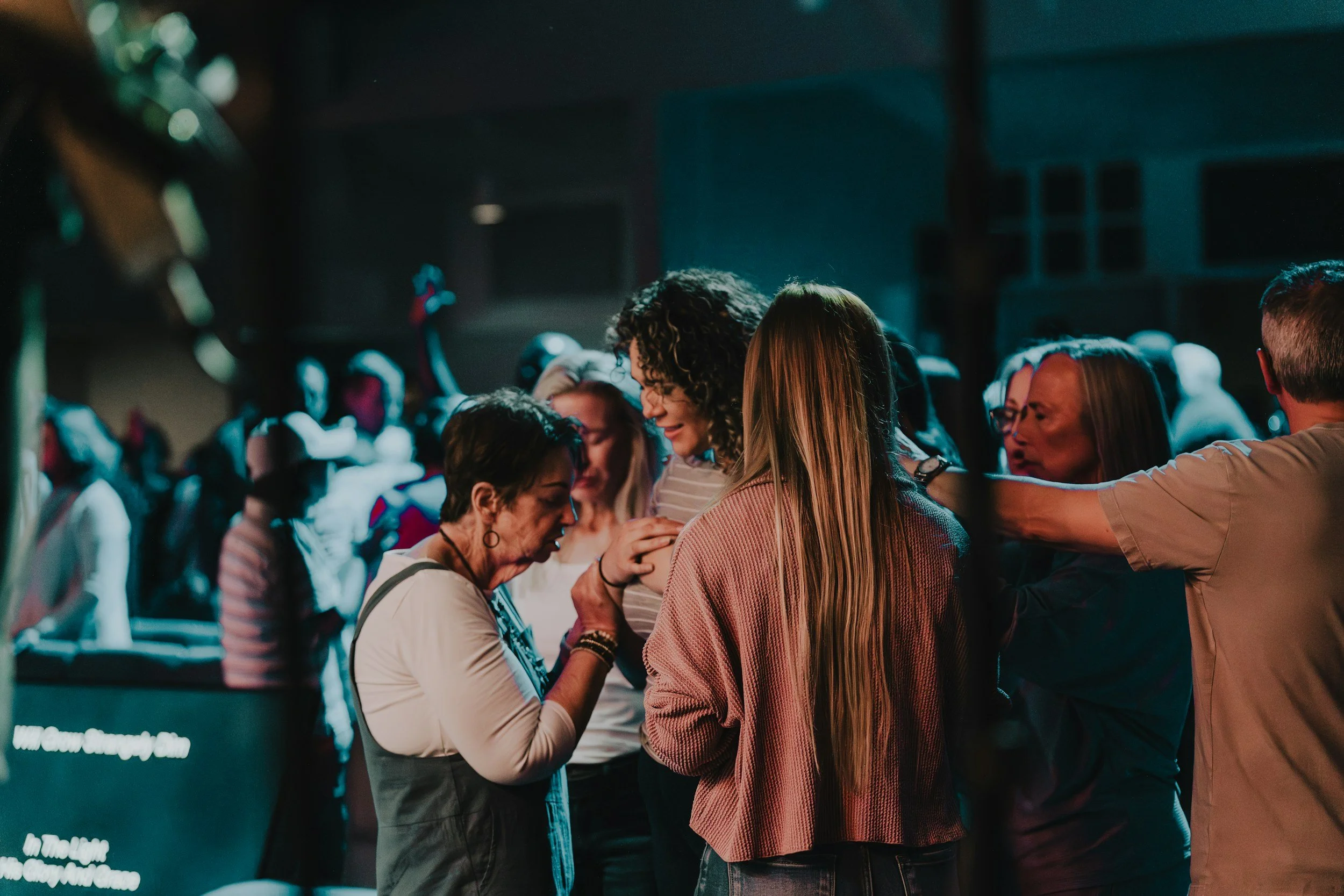
Reflecting on my class reunion has had an unexpected result. I discovered that one of the most important rituals in my life has been attending the Sunday services or weekly gatherings of my church. I have concluded that, in my life, it has been the ritual of rituals. By going to church each Sunday, I have sent myself a message about what is important in life. By going to church, I have created and maintained community with brothers and sisters in Christ. During Sunday services, I have been connected with God and corrected by him. While in fellowship with others, I have celebrated and chronicled defining moments in my life and in the lives of others. Through going to church, my life has been reordered and stabilized.
I have been reading about a loneliness epidemic in America. Feiler argues that ritual gatherings are part of the cure. So I encourage you to enrich your life by making room for unnecessary but intentional activities with others. May one of those rituals be weekly participation in the Sunday services of your congregation.